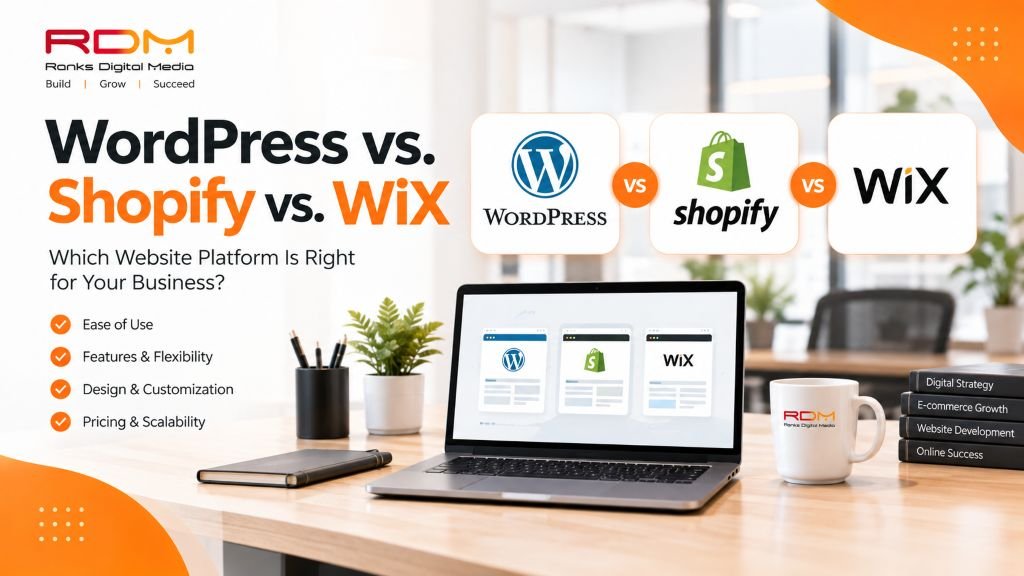
The “best” platform question is usually asked the wrong way. The real question isn’t which platform is objectively superior — it’s which one fits your specific business model, technical comfort level, and growth plans well enough to actually generate revenue instead of becoming a maintenance burden.
Strengths
Complete control over design, functionality, and SEO structure. Ideal for combining content marketing, custom functionality, and ecommerce (via WooCommerce) in one flexible system.
Trade-offs
Requires ongoing technical maintenance — updates, security, hosting decisions. Flexibility makes it powerful but also easier to configure poorly without expertise.
Strengths
Purpose-built for selling products, with reliable performance and security handled by the platform. Fastest path from idea to a functioning, professional online store.
Trade-offs
Less flexibility for complex content strategies or custom functionality outside ecommerce. Ongoing app costs can add up as needs grow.
Strengths
The fastest, most beginner-friendly path to a professional-looking website, with a genuinely simple visual editor requiring no technical background.
Trade-offs
Less scalable for complex or rapidly growing needs, and historically more limited SEO flexibility compared to WordPress — though this has improved significantly.
Head-to-Head Comparison
| Factor | WordPress | Shopify | WIX |
|---|---|---|---|
| Time to Launch | ⚠️ Slower — requires setup and configuration | ✅ Fast — purpose-built for stores | ✅ Fastest — visual editor, no technical skills |
| Ecommerce Capability | ✅ Strong — via WooCommerce, full control | ✅ Excellent — built for selling | ⚠️ Growing — suitable for smaller stores |
| Content Marketing | ✅ Excellent — native blogging engine | ⚠️ Limited — basic blog functionality | ⚠️ Limited — basic blog functionality |
| Customization | ✅ Unlimited — full code access | ⚠️ Limited — platform boundaries | ⚠️ Limited — visual editor constraints |
| SEO Control | ✅ Full — plugins and code access | ⚠️ Good — some URL limitations | ⚠️ Improved — catching up steadily |
| Technical Maintenance | ⚠️ High — self-managed | ✅ Low — platform managed | ✅ Lowest — fully managed |
| Ongoing Cost | ⚠️ Variable — hosting + plugin costs | ⚠️ Growing — monthly fee + app costs | ✅ Predictable — flat monthly fee |
The Real Decision Framework
Ask yourself these three questions honestly:
How much content marketing will this site need to support?
Is the core business model primarily selling products, offering services, or both?
How much ongoing technical involvement can you realistically commit to?
Your honest answers point toward the right platform far more reliably than any generic “best platform” ranking.
The Platform Matters Less Than the Execution
A poorly built WordPress site will underperform a well-built WIX site, and vice versa. Platform choice sets your ceiling and floor for flexibility and ease of use — but proper implementation determines whether you actually reach that ceiling.
🤔 Not Sure Which Platform Fits Your Business?
At Ranks Digital Media, we build on all three platforms — WordPress, Shopify, and WIX — so our recommendation is always based on what’s right for your business, not what we happen to specialize in.
Here’s what a free consultation covers:
- 📝 Business Model Assessment — What are you actually selling, and how will the site support it?
- 📊 Platform Fit Analysis — Which platform aligns with your model, budget, and growth plans
- 🔍 SEO & Content Readiness Review — What your site needs to rank from day one
- ⚡ Performance Expectations — Realistic timelines and costs for each platform option
- 🔄 Migration Planning (if needed) — If you’re on the wrong platform, here’s how to switch without losing rankings
See our WordPress development, Shopify development, or WIX development services for more detail. Or explore our broader web development services.
💡 Get a free consultation and we’ll help you choose based on your actual goals, not generic platform hype. No platform bias — just honest advice for your specific situation.
Limited slots available — choose the right platform before you invest, not after you rebuild
Frequently Asked Questions
Conclusion
The WordPress vs. Shopify vs. WIX debate has been framed wrong for years. It’s not a battle between platforms — it’s a question of fit. WordPress rewards businesses with content depth and technical appetite. Shopify rewards product-focused sellers who want speed and reliability without the maintenance. WIX rewards simplicity-seekers who need a professional presence without a learning curve.
Choose the platform that matches your business model and your realistic capacity to manage it. Then — and this is the part most people skip — invest in implementing it properly. A well-executed site on the “wrong” platform will always outperform a poorly executed site on the “right” one.
Explore our related services: