📅 Published: May 2026 | 👤 By: Ranks Digital Media SEO Team | 🕐 12 min read | 📍 Updated for 2026 Algorithms
📖 What You’ll Learn
- What is On-Page SEO?
- Why On-Page SEO Matters for Delhi Businesses
- Keyword Research & Optimization
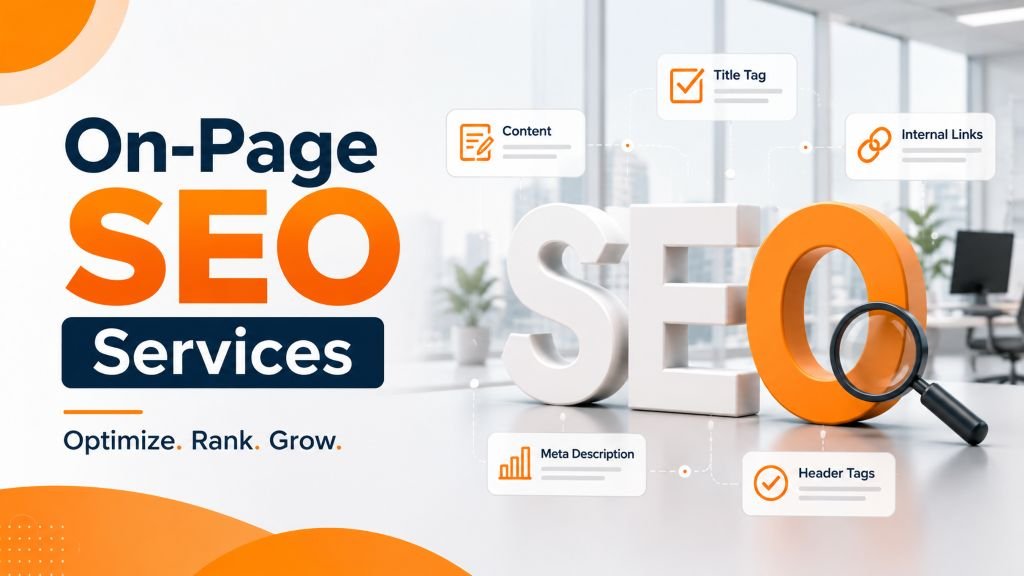
- Meta Tags: Title, Description & Headers
- Content Optimization for SEO
- Image Optimization
- URL Structure Optimization
- Internal Linking Strategies
- Mobile Optimization
- Page Speed Optimization
- Schema Markup & Rich Snippets
- Monitoring & Analyzing Performance
- Frequently Asked Questions
What is On-Page SEO? A Complete Overview for 2026
In the ever-evolving digital landscape, having a website is just the beginning. To truly stand out, businesses must master on-page SEO, which involves optimizing elements within your website to boost its visibility on search engine results pages (SERPs). This includes strategies related to content, HTML source code, and other on-site factors. Implementing effective on-page SEO can significantly enhance your online presence and improve your rankings.
On-page SEO refers to the practice of optimizing individual web pages to rank higher and earn more relevant traffic in search engines. This encompasses various elements such as content quality, keyword usage, meta tags, and HTML source code. Unlike off-page SEO, which focuses on external factors like backlinks, on-page SEO is entirely within your control.
📊 Key On-Page SEO Statistics (2025-2026)
- 🔍 94% of all search traffic goes to page 1 results (Backlinko, 2025)
- 📝 Pages with 1200+ words rank significantly higher than shorter content
- ⚡ 53% of mobile users abandon sites that take over 3 seconds to load
- 🏷️ Pages with optimized meta descriptions get 5.8% more clicks
Why On-Page SEO Matters for Delhi Businesses in 2026
Understanding the importance of on-page SEO is crucial for any business. If your site isn’t optimized, search engines might struggle to determine its relevance to user queries. When executed correctly, on-page SEO becomes a powerful tool in your marketing arsenal, helping you reach your target audience more effectively.
Competitive Landscape of Digital Marketing in Delhi
The digital marketing landscape in Delhi is highly competitive, with over 500,000+ businesses actively competing for online visibility. A solid on-page SEO strategy is not just beneficial; it is essential for survival in this crowded space. Businesses that prioritize on-page SEO are 3x more likely to capture leads and convert them into loyal customers.
Why Local Businesses Need On-Page SEO
For local businesses in Delhi, on-page SEO is vital. It helps in targeting local customers through geo-specific keywords like “best cafe in Connaught Place” or “SEO services near me”. This targeted approach significantly increases the chances of attracting foot traffic (by 40-60%) and local clientele.
Keyword Research & Optimization – The Foundation of SEO
Keyword research is the foundation of on-page SEO. Identifying the right keywords allows you to tailor your content to meet the search intent of your audience.
How to Find High-Performing Keywords
Utilize tools like Google Keyword Planner, Ahrefs, SEMrush, or Ubersuggest to uncover high-volume, low-competition keywords relevant to your niche. For Delhi businesses, focus on:
- Geo-targeted keywords: “SEO services Delhi NCR”, “best restaurant in South Delhi”
- Long-tail keywords: “how to optimize on-page SEO for small business”
- Question-based keywords: “why is on-page SEO important for my website”
- Intent-based keywords: “buy”, “near me”, “best”, “affordable”
Meta Tags Optimization – Title, Description & Headers
Meta tags are snippets of text that describe a webpage’s content. They play a significant role in helping search engines understand what your page is about.
Crafting the Perfect Meta Title
Your title tag should be concise (50-60 characters), include your primary keyword at the beginning, and accurately represent the content. Example: “On-Page SEO Services Delhi – Best Practices for 2026”
Writing Engaging Meta Descriptions
A compelling meta description (150-160 characters) should summarize your content while including relevant keywords and a call-to-action to encourage clicks. Optimized meta descriptions can improve CTR by 5-10%.
Headers (H1, H2, H3, H4) – Organizing Your Content
Headers help organize your content and make it easier to read. The H1 tag is reserved for the main title (only one per page). H2 tags for main sections, H3 tags for subsections, and H4 tags for detailed points. Proper header structure improves both user experience and SEO rankings.
Content Optimization for SEO – Creating Value That Ranks
Importance of High-Quality, Relevant Content
Content is king when it comes to SEO. High-quality, informative, and relevant content not only attracts visitors but also encourages them to stay longer on your site. This improves your dwell time and bounce rate, which search engines interpret as signs of valuable content.
Content-Length and Structure for SEO
While there is no one-size-fits-all rule, longer, well-researched articles (1200-2000+ words) often perform better in search rankings. Use a clear structure with headings, bullet points, short paragraphs (2-3 sentences), and images to enhance readability.
Use of LSI Keywords and Semantic SEO
Latent Semantic Indexing (LSI) keywords are semantically related to your primary keyword. Including LSI keywords helps search engines better understand your topic and can improve your chances of ranking for multiple related searches. For “on-page SEO”, LSI keywords include: meta tags, keyword optimization, header tags, internal linking, page speed, mobile responsiveness.
Image Optimization – Boosting Speed & SEO
ALT Tags for Images
Using ALT tags for images improves accessibility and provides context to search engines. Ensure your ALT tags describe the image while including relevant keywords. Example: “On-page SEO services Delhi – keyword research dashboard”
Image File Names and Compression
Optimize image file names to be descriptive and keyword-rich (e.g., “on-page-seo-delhi-best-practices.jpg” instead of “IMG_001.jpg”). Compress images using tools like ShortPixel, TinyPNG, or Imagify to improve loading speed without compromising quality. Compressed images can reduce load time by 30-50%.
URL Structure Optimization – Clean & Keyword-Rich
An SEO-friendly URL is concise, descriptive, and includes your target keyword. Example: www.yoursite.com/on-page-seo-delhi-best-practices instead of www.yoursite.com/page1?id=12345.
Best Practices for URL Structure
- Keep URLs short and readable (under 60 characters)
- Use hyphens (-) to separate words, not underscores (_)
- Include target keywords naturally
- Avoid stop words (and, of, the, a, an, to, for)
- Use lowercase letters only
Internal Linking Strategies – Boosting Crawlability & Authority
Benefits of Internal Links for SEO
Internal links connect different pages on your website, helping search engines crawl your site more effectively. They also guide users to relevant content, enhancing their experience and reducing bounce rates. Websites with strong internal linking see up to 40% more page views per session.
Best Practices for Internal Linking
- Use descriptive anchor text (not “click here”)
- Link to high-authority pages on your site (pillar content)
- Create a logical navigation flow (pillar → cluster → support)
- Avoid over-optimization (3-5 internal links per page is ideal)
- Include related posts sections for blog content
Mobile Optimization – Google’s Mobile-First Indexing
With 60%+ of internet traffic coming from mobile devices, having a mobile-responsive design is essential. Google uses mobile-first indexing, meaning it primarily uses the mobile version of your site for ranking and indexing.
How to Ensure Mobile-Friendly Design
- Use responsive web design (CSS media queries)
- Ensure fast loading times (under 2.5 seconds on mobile)
- Optimize tap targets (buttons should be 48px minimum)
- Use readable font sizes (minimum 16px for body text)
- Avoid pop-ups and interstitials that block content
Page Speed Optimization – Core Web Vitals
Page loading speed is a critical ranking factor. 53% of mobile users abandon a site that takes over 3 seconds to load. Google’s Core Web Vitals measure LCP (loading), FID (interactivity), and CLS (visual stability).
Techniques to Improve Page Speed
- Optimize images – Compress and use WebP format (reduces size by 30%)
- Enable lazy loading – Load images only when visible
- Minify CSS, JavaScript, and HTML – Remove unnecessary characters
- Leverage browser caching – Store static files locally
- Use a Content Delivery Network (CDN) – Serve content from nearest server
- Reduce server response time – Upgrade hosting (VPS or dedicated)
Schema Markup & Rich Snippets – Standing Out in SERPs
What is Schema Markup?
Schema markup is a code (structured data) that you add to your website to help search engines understand the context of your content. It enhances your visibility in search results through rich snippets (star ratings, prices, event dates, FAQ, etc.).
How to Implement Schema Markup
Implement schema markup using JSON-LD format (Google’s recommended method). Use Google’s Rich Results Test to validate your markup. Pages with rich snippets can see 20-40% higher CTR.
Important schema types: LocalBusiness, Organization, Article, FAQ, HowTo, Product, Review, BreadcrumbList, and Service.
Social Sharing Integration – Amplifying Your Reach
Role of Social Signals in SEO
While social signals (shares, likes) are not direct ranking factors, they indirectly influence SEO by increasing visibility, driving traffic, and building backlinks. Content that performs well on social media tends to earn more natural backlinks.
Integrating Social Media for Better SEO
Include social sharing buttons on your content to encourage engagement. Maintain an active social media presence on platforms relevant to your audience (Instagram, Facebook, LinkedIn, Twitter).
Monitoring & Analyzing On-Page SEO Performance
Tools to Track On-Page SEO
Utilize tools like Google Analytics 4, Google Search Console, SEMrush, Ahrefs, Moz Pro, and Screaming Frog to track the performance of your on-page SEO efforts. These tools provide valuable insights into traffic sources, user behavior, keyword rankings, and technical issues.
Importance of Regular SEO Audits
Regularly auditing your on-page SEO (every 3-6 months) ensures that your strategies remain effective and aligned with current best practices. This helps in identifying areas for improvement (broken links, duplicate content, slow pages, missing meta tags) and adjusting your approach accordingly.
Conclusion – Master On-Page SEO for Long-Term Growth
In conclusion, mastering on-page SEO is essential for businesses seeking to improve their online visibility, especially in a competitive environment like Delhi. By focusing on critical aspects such as keyword optimization, content quality, meta tags, internal linking, page speed, and mobile responsiveness, businesses can enhance their search engine rankings and attract more qualified visitors.
🚀 Ready to Boost Your Website’s On-Page SEO?
If you’re seeking to boost your website’s performance, consider partnering with Ranks Digital Media, a leading SEO company in Delhi. We can help you tailor an on-page SEO strategy that meets your business needs and helps you stand out in the crowded digital landscape.
👨💼 About the Author
Ranks Digital Media SEO Team has 8+ years of experience in on-page and technical SEO, helping Delhi NCR businesses achieve top rankings. We specialize in Google algorithm updates, Core Web Vitals optimization, and content strategy.
❓ Frequently Asked Questions About On-Page SEO
What is on-page SEO and why is it important?
On-page SEO is the practice of optimizing individual web pages to rank higher in search engines. It includes optimizing content, meta tags, headers, images, URL structure, internal links, and page speed. It’s important because it helps search engines understand your content and relevance to user queries, directly impacting your rankings. Unlike off-page SEO (backlinks), on-page SEO is 100% within your control and provides the foundation for all other SEO efforts.
How much do on-page SEO services cost in Delhi?
On-page SEO services in Delhi typically range from ₹15,000 to ₹50,000 per month depending on website size and complexity. A basic SEO audit and optimization for a small website (10-20 pages) starts around ₹15,000–₹25,000. Comprehensive on-page SEO for medium to large websites (50-200+ pages) ranges from ₹30,000–₹50,000 per month. Most agencies, including Ranks Digital Media, offer custom packages based on your specific needs.
How long does it take to see results from on-page SEO?
On-page SEO improvements typically show initial results within 2-4 weeks. However, significant ranking improvements usually take 3-6 months. This timeline varies based on your website’s age, domain authority, competition level, and the extent of optimization needed. Unlike off-page SEO (link building), on-page changes are implemented immediately, but search engines need time to crawl, index, and reassess your pages.
What is the difference between on-page SEO and off-page SEO?
On-page SEO refers to optimizations made directly on your website — content, meta tags, headers, images, internal links, URL structure, and page speed. You have complete control over these elements. Off-page SEO refers to actions taken outside your website to improve rankings — backlinks, social media signals, guest posting, influencer outreach, and brand mentions. Both are essential for a complete SEO strategy, but on-page SEO is the foundation you must master first.
What are Core Web Vitals and why do they matter?
Core Web Vitals are Google’s set of metrics measuring user experience: Largest Contentful Paint (LCP – loading speed, should be under 2.5 seconds), First Input Delay (FID – interactivity, under 100ms), and Cumulative Layout Shift (CLS – visual stability, under 0.1). They became ranking factors in 2021 and remain critical in 2026. Poor Core Web Vitals can significantly hurt your rankings, especially on mobile searches.
How do I optimize meta tags for better click-through rates?
To optimize meta tags: (1) Keep title tags under 60 characters with primary keyword at the beginning, (2) Write meta descriptions between 150-160 characters that summarize content and include a call-to-action, (3) Use power words like “Best”, “Ultimate”, “Free”, “2026”, (4) Match search intent — ensure your meta tag promises what the page delivers, (5) Test different versions using A/B testing tools. Optimized meta tags can improve CTR by 5-10%.
What is keyword cannibalization and how to fix it?
Keyword cannibalization occurs when multiple pages on your website target the same keyword, causing them to compete against each other in search results. This confuses search engines and dilutes your ranking potential. To fix it: (1) Identify cannibalizing pages using Google Search Console or SEMrush, (2) Consolidate content into one authoritative page (pillar page), (3) Use 301 redirects from duplicate pages to the main page, (4) Optimize remaining pages for different, related keywords.
Is content length a ranking factor in 2026?
Yes, content length correlates strongly with rankings. Studies show the average first-page result on Google has 1200-1500 words. However, quality matters more than quantity. A well-researched, comprehensive 1200-word article will outrank a thin 300-word article and a fluffy 3000-word article. Focus on covering topics thoroughly, answering user questions completely, and providing unique value. For local SEO, 800-1200 well-optimized words are often sufficient.
What tools do professionals use for on-page SEO?
Professional on-page SEO tools include: (1) Google Search Console — free, essential for monitoring performance, (2) Google Analytics 4 — tracks user behavior, (3) SEMrush or Ahrefs — comprehensive keyword and competitor analysis, (4) Screaming Frog — technical SEO audits (crawl issues, broken links, duplicate content), (5) Yoast SEO or Rank Math — WordPress on-page optimization, (6) GTmetrix or PageSpeed Insights — speed and Core Web Vitals testing.
Why choose Ranks Digital Media for on-page SEO services in Delhi?
Ranks Digital Media stands out because: (1) We provide comprehensive on-page SEO audits identifying every fix needed, (2) Our team implements 50+ on-page optimizations including meta tags, headers, schema, internal linking, and page speed, (3) We focus on both Google guidelines and user experience, (4) We offer transparent monthly reports showing keyword rankings and traffic improvements, (5) We’ve helped 500+ Delhi businesses achieve page 1 rankings, (6) Our affordable pricing and month-to-month contracts offer flexibility without long-term commitment.