What is Performance Marketing? Pay for Results
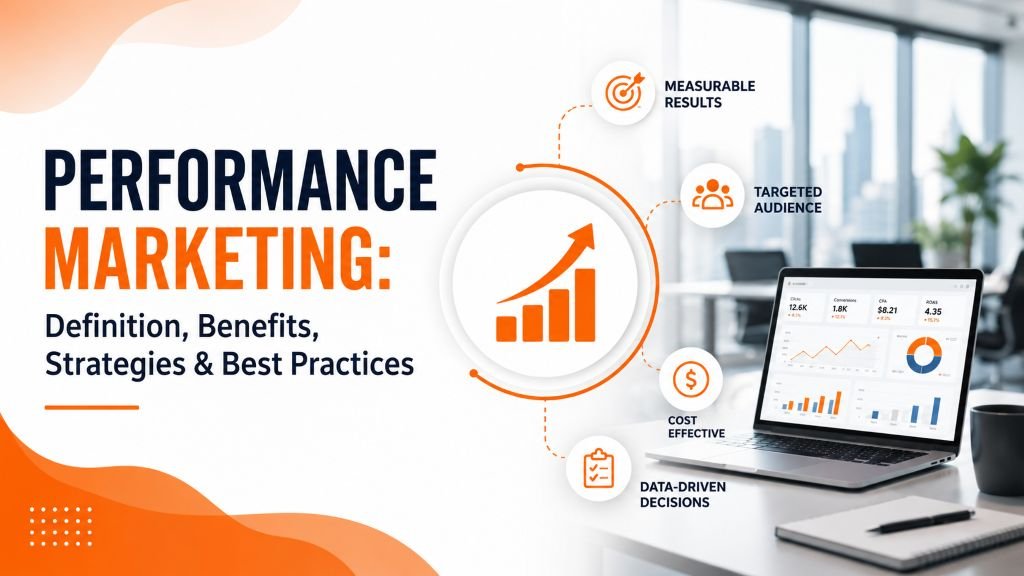
Performance marketing is a form of digital marketing in which brands only pay marketing service providers after their business objectives have been met or when specific actions have been taken, such as a click, sale, or lead. It is a data-driven, result-based, and optimized strategy that uses tailored and targeted ad campaigns to generate more revenue.
Performance marketing relies on various channels, including:
- Affiliate Marketing – Paying partners for referred sales or leads
- Pay-Per-Click (PPC) Advertising – Google Ads, Bing Ads, social media ads
- Social Media Advertising – Facebook, Instagram, LinkedIn, TikTok ads
- Search Engine Marketing (SEM) – Paid search placements
- Native Advertising – Sponsored content on platforms like Taboola, Outbrain
Key Benefits of Performance Marketing
- 📊 Measurable ROI: Track exactly what you spend and what you earn from every campaign
- 🎯 Targeted Reach at Scale: Reach your ideal customers with precision targeting
- 💰 Reduced Risk: No wasted budget on ineffective or irrelevant ads
- 🔍 Transparency & Accountability: Clear metrics show exactly what you're paying for
- ⚡ Real-Time Optimization: Adjust campaigns instantly based on performance data
- 📈 Scalability: Double down on what works and cut what doesn't
How Performance Marketing Works (5-Step Process)
- Establish Your Campaign Goal: Define what you want to achieve (sales, leads, clicks, impressions). Set budget and timeline.
- Choose Your Digital Channel(s): Select the best platform for your audience—Google Ads, Meta, affiliate networks, or native ads.
- Create and Launch the Campaign: Develop engaging content, creative assets, and implement tracking tools (pixels, UTM parameters).
- Measure and Optimize Your Campaign: Monitor KPIs including CPA (Cost Per Action), ROAS (Return on Ad Spend), and conversion rate.
- Handle Potential Pitfalls: Watch for fraud, technical issues, or negative feedback. Maintain strong partner relationships.
Performance Marketing vs Traditional Marketing
| Traditional Marketing | Performance Marketing |
|---|---|
| Pay upfront for ad placement | Pay only for results (clicks, leads, sales) |
| Difficult to measure exact ROI | 100% trackable ROI |
| Brand awareness focus | Conversion & action focus |
| Fixed budget regardless of performance | Dynamic budget allocation to top performers |
7 Best Practices for Performance Marketing in 2026
- Always set clear campaign goals: Define specific, measurable objectives before launching.
- Use conversion tracking to track performance: Implement pixels, server-side tracking, and UTM parameters.
- Take advantage of automation and machine learning: Let AI optimize bids, budgets, and targeting in real-time.
- Allocate your budget to the best performing channels: Shift spend to what works; cut what doesn't.
- Create specific target audiences: Use first-party data, lookalike audiences, and behavioral targeting.
- Create engaging and relevant content: Match creative to platform and audience intent.
- Test continuously: A/B test headlines, images, offers, and CTAs.
8 Common Mistakes to Avoid in Performance Marketing
- Not defining your customer first – Build buyer personas before launching campaigns
- Not tracking results – Without tracking, you're flying blind
- Ignoring your product-market fit – Ensure your offer matches audience needs
- Failing to look at the holistic strategy – Performance marketing works best integrated with brand marketing
- Lack of consistency – Maintain brand voice across all channels
- Too much experimentation without research – Test systematically, not randomly
- Thinking you need to spend big to get results – Start small, optimize, then scale
- Focusing solely on digital – Consider omnichannel integration with offline touchpoints
How to Create a Buyer Persona for Performance Marketing
Follow these 5 steps to create data-driven buyer personas:
- Scan your internal client database: Analyze existing customers for common demographics, psychographics, and purchase patterns.
- Perform market research: Conduct surveys, interviews, or focus groups with current customers and prospects.
- Organize collected data: Use spreadsheets or CRM tools to identify patterns and trends.
- Create a buyer persona: Use the template below to build detailed profiles.
- Share buyer personas with the team: Align marketing, sales, and product teams around shared customer understanding.
📋 Buyer Persona Template – Fill in Your Details
Name: _______________
Age: _______________
Location: _______________
Occupation: _______________
Income: _______________
Primary goal: _______________
Secondary goal: _______________
What success looks like: _______________
Biggest challenge: _______________
Frustrations: _______________
Objections to buying: _______________
Preferred channels: _______________
Content types: _______________
Time of day active: _______________
💡 Pro tip: Create 3-5 personas for different customer segments
🚀 Scale Your Revenue with Data-Driven Performance Marketing
Now that you know what performance marketing is and how it can benefit your business, are you ready to take your marketing to the next level?
Ranks Digital Media specializes in creating and executing high-ROI performance marketing campaigns that deliver measurable results—not just impressions.
🔥 What we deliver:
- 📊 Full-Funnel Performance Marketing – From awareness to conversion
- 🤖 AI-Powered Campaign Optimization – Machine learning for bid & budget management
- 📈 Real-Time ROAS Tracking – Transparent dashboards showing every dollar's impact
- 🎯 Buyer Persona Development – Data-driven targeting that converts
- 💰 Pay-for-Performance Models – You pay only for results
💡 Stop wasting budget on ads that don't convert. Let's build a performance marketing engine that drives predictable revenue.
Free consultation for first 5 businesses this month
Frequently Asked Questions (FAQ) – Rich Results Ready
Conclusion
Performance marketing represents the future of advertising—where every dollar is tied to a measurable outcome. Whether you're a startup with a limited budget or an enterprise looking to scale, performance marketing offers the transparency, accountability, and ROI that modern businesses demand.
Explore our related services: