📅 Published: January 2026 | 👤 By: Ranks Digital Media Team | 🕐 10 min read | 📍 Updated for 2026 Trends
Marketing has been an essential aspect of business for centuries. It is the process of promoting and selling products or services to potential customers. Traditionally, marketing has been carried out through various offline channels, such as billboards, newspapers, magazines, and television ads. However, with the rise of the internet and technological advancements, digital marketing has become increasingly popular in recent years.
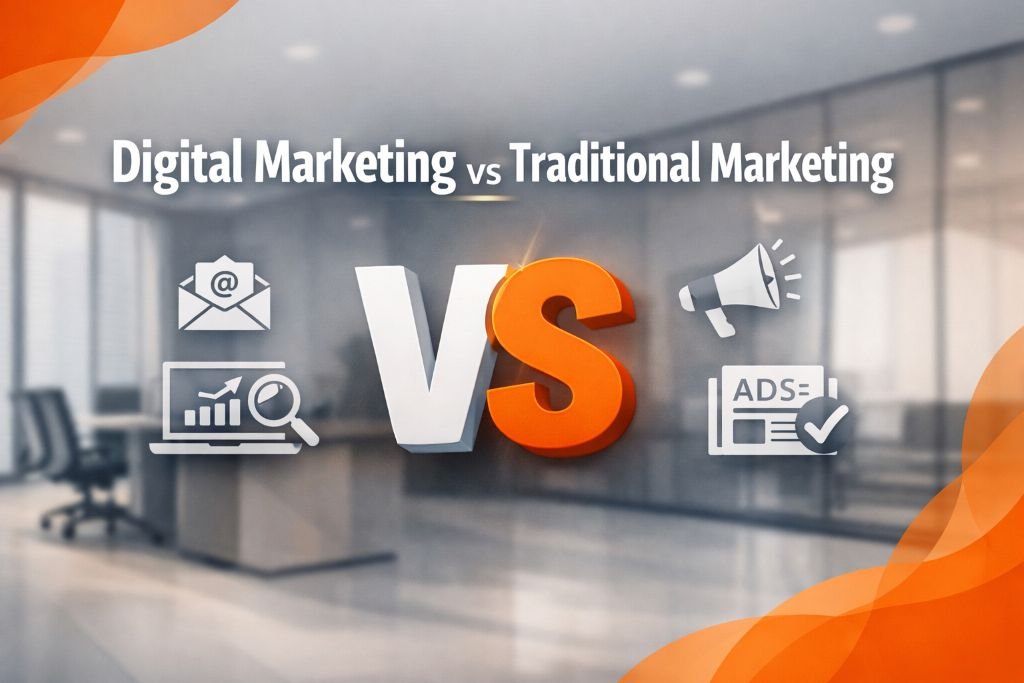
What is digital marketing, and how does it differ from traditional marketing? In this article, we will explore the differences between digital marketing and traditional marketing, including their definitions, strategies, advantages, and disadvantages — helping you decide which approach is right for your business in 2026.
📖 Table of Contents
- What is Digital Marketing?
- Digital Marketing Strategies
- Advantages of Digital Marketing
- Disadvantages of Digital Marketing
- What is Traditional Marketing?
- Advantages of Traditional Marketing
- Disadvantages of Traditional Marketing
- Key Differences Between Digital and Traditional Marketing
- Frequently Asked Questions
- Conclusion
📊 Digital Marketing vs Traditional Marketing: Quick Comparison
| Factor | Digital Marketing | Traditional Marketing |
|---|---|---|
| Reach | Global audience | Local/Regional only |
| Targeting | Precise (demographics, interests, behavior) | Broad, less targeted |
| Cost | Low to medium (₹15,000+/month) | High (₹50,000–₹10,00,000+) |
| Measurability | 100% measurable (real-time analytics) | Difficult to measure |
| Speed | Fast (hours to days) | Slow (weeks to months) |
| Interaction | Two-way (comments, messages, reviews) | One-way (no direct feedback) |
| ROI Tracking | Easy with Google Analytics, CRM | Very difficult |
What is Digital Marketing?
Digital marketing refers to the process of promoting and selling products or services using digital channels, such as search engines, social media, email, and websites. Digital marketing allows businesses to reach a wider audience, engage with potential customers, and measure the effectiveness of their marketing campaigns in real-time. In 2026, over 65% of global marketing budgets are allocated to digital channels (Source: Statista 2026).
Digital Marketing Strategies
Digital marketing encompasses a range of strategies and techniques, including:
- Search Engine Optimization (SEO): SEO is the practice of optimizing a website to rank higher in search engine results pages (SERPs). The goal is to improve the website’s visibility and drive more organic traffic to the site. Learn more about our SEO services.
- Pay-per-click (PPC) Advertising: PPC advertising is a form of digital advertising where advertisers pay a fee each time a user clicks on one of their ads. The most common type is Google Ads, where advertisers bid on keywords to display their ads in search results.
- Social Media Marketing: Using platforms like Facebook, Instagram, LinkedIn, and Twitter to promote products, engage with customers, and build brand awareness.
- Email Marketing: Sending promotional messages and newsletters to a list of subscribers to build relationships, promote products, and encourage repeat business.
- Content Marketing: Creating and sharing valuable content (blog posts, videos, infographics) to attract and engage potential customers, building trust and credibility.
Advantages of Digital Marketing
Digital marketing has several advantages over traditional marketing:
- Cost-Effective: Digital marketing is often more cost-effective than traditional marketing. Running a social media campaign or sending an email newsletter is significantly cheaper than newspaper or television ads. SEO services start from just ₹15,000/month.
- Targeted: Digital marketing allows businesses to target specific audiences based on demographics, interests, and behavior. This targeted approach results in higher conversion rates and better ROI.
- Measurable: Digital marketing campaigns can be measured and analyzed using tools like Google Analytics. Businesses can track impressions, clicks, conversions, and revenue in real-time.
- Global Reach: Digital marketing allows businesses to reach a global audience, regardless of location — especially beneficial for digital products and services.
- Personalization: Digital marketing enables personalized messaging based on user behavior, past purchases, and preferences.
Disadvantages of Digital Marketing
Digital marketing also has some disadvantages:
- Limited Reach with Older Demographics: While digital marketing can reach a global audience, it may not be as effective for older or less tech-savvy demographics.
- High Competition: Digital marketing is highly competitive. Businesses need to constantly innovate and adapt to stay ahead of competitors.
- Technical Expertise Required: Digital marketing requires knowledge of various tools and platforms. This can be a barrier for businesses lacking resources or skills — which is why many outsource to agencies like Ranks Digital Media.
- Privacy Concerns: With increasing data privacy regulations (GDPR, CCPA), businesses must be careful about how they collect and use customer data.
What is Traditional Marketing?
Traditional marketing refers to the use of offline channels to promote and sell products or services. These channels include billboards, television ads, radio spots, print ads (newspapers, magazines), and direct mail (flyers, brochures, catalogs).
Traditional Marketing Strategies
- Print Advertising: Newspaper ads, magazine ads, flyers, and brochures.
- Broadcast Advertising: Television commercials and radio spots.
- Outdoor Advertising: Billboards, posters, banners, and transit ads (buses, trains, metro).
- Direct Mail: Catalogs, postcards, and promotional letters sent directly to potential customers.
Advantages of Traditional Marketing
- Wide Local Reach: Traditional marketing channels can reach a broad local audience, including those who may not use digital channels.
- Tangible: Physical materials like flyers and brochures can be kept and referred to by potential customers.
- Familiarity & Trust: Traditional marketing channels have existed for decades and are familiar to many people, which can increase credibility and trust.
- High Impact: Television and billboard ads can create strong brand impressions due to their visual nature.
Disadvantages of Traditional Marketing
- Expensive: Traditional marketing can be very expensive. A 30-second television ad can cost thousands to millions of rupees.
- Difficult to Target: Traditional marketing channels are less targeted and may not effectively reach specific demographics.
- Difficult to Measure: Tracking the effectiveness of traditional campaigns is challenging, making it hard to determine ROI.
- Long Lead Times: Producing and placing traditional ads takes weeks or months, unlike digital ads which launch in hours.
- No Real-Time Optimization: Once a traditional ad is published, it cannot be changed or optimized based on performance.
Key Differences Between Digital Marketing and Traditional Marketing
While both digital and traditional marketing have their advantages and disadvantages, they differ in several key ways:
- Reach: Digital marketing reaches a global audience; traditional marketing is typically limited to a specific geographic area.
- Targeting: Digital allows precise targeting by demographics, interests, and behavior; traditional marketing is broad and less targeted.
- Cost: Digital is more cost-effective (₹15,000–₹1,00,000/month); traditional is expensive (₹50,000–₹10,00,000+ per campaign).
- Measurability: Digital campaigns are 100% measurable in real-time; traditional campaigns are difficult to measure.
- Interaction: Digital allows two-way communication (comments, messages); traditional is one-way communication.
- Speed: Digital campaigns launch in hours to days; traditional campaigns take weeks to months.
- Flexibility: Digital campaigns can be optimized in real-time; traditional campaigns cannot be changed after publication.
Frequently Asked Questions
Is digital marketing more effective than traditional marketing?
It depends on the business and its goals. Digital marketing is more effective for reaching a wider audience, precise targeting, and measuring campaign effectiveness. Traditional marketing can be more effective for reaching local audiences, older demographics, and building brand awareness through high-impact visuals like TV and billboards. In 2026, most successful businesses use an integrated approach combining both digital and traditional strategies.
Do I need technical expertise to implement digital marketing strategies?
Yes, digital marketing requires technical expertise and knowledge of various tools and platforms (Google Analytics, Google Ads, SEO tools, social media schedulers). However, you can outsource to a digital marketing agency like Ranks Digital Media to handle all technical aspects while you focus on running your business.
Can small businesses afford digital marketing?
Absolutely. Digital marketing is much more cost-effective than traditional marketing. Small businesses can start with SEO services from ₹15,000–₹25,000 per month or social media management from ₹15,000 per month. There are also many low-cost or free tools available. Compare this to a single newspaper ad costing ₹50,000+ or a TV commercial costing lakhs — digital marketing is far more accessible for small budgets.
Is traditional marketing still relevant in 2026?
Yes, traditional marketing is still relevant, particularly for local businesses, B2B companies targeting older decision-makers, and brands looking for high-impact visibility. However, traditional marketing works best when combined with digital strategies. For example, a billboard can drive traffic to a website, and a TV ad can include a QR code or hashtag for online engagement. The most effective approach in 2026 is integrated marketing — using both channels together.
Which marketing strategy gives the best ROI: digital or traditional?
Digital marketing typically delivers higher ROI because it is measurable, targetable, and cost-effective. According to a 2025 report, businesses earn an average of $2.50 for every $1 spent on digital marketing ($3–$5 for email marketing). Traditional marketing ROI is harder to calculate but often lower due to high costs and lack of measurability. However, the best ROI comes from an integrated strategy tailored to your specific audience and goals.
How do I choose between digital marketing and traditional marketing?
Consider these factors: Budget (digital is more affordable), Target Audience (digital for younger/tech-savvy, traditional for older/local), Goals (brand awareness vs direct sales), Location (local business may benefit from both), and Measurability Needs (digital wins for tracking). For most small to medium businesses in 2026, starting with digital marketing (SEO, social media, PPC) and adding traditional elements as budget allows is the smartest approach.
Conclusion
In conclusion, digital marketing and traditional marketing both have their advantages and disadvantages. Businesses should consider their goals, target audience, budget, and location when deciding which marketing strategies to use.
While digital marketing allows for more precise targeting, measurability, and cost-effectiveness, traditional marketing can still be effective for reaching local audiences and building brand awareness through high-impact channels. Ultimately, the best marketing strategy is one that aligns with your business’s goals and resources — and for most businesses in 2026, that means starting with digital marketing and expanding strategically.
Ready to Grow Your Business with Digital Marketing?
At Ranks Digital Media, we help businesses like yours succeed with SEO, PPC, social media marketing, and content marketing. Whether you’re just starting or looking to scale, we have affordable packages to fit your budget.
Or call us at +91-9958089090 to speak with a digital marketing expert today.